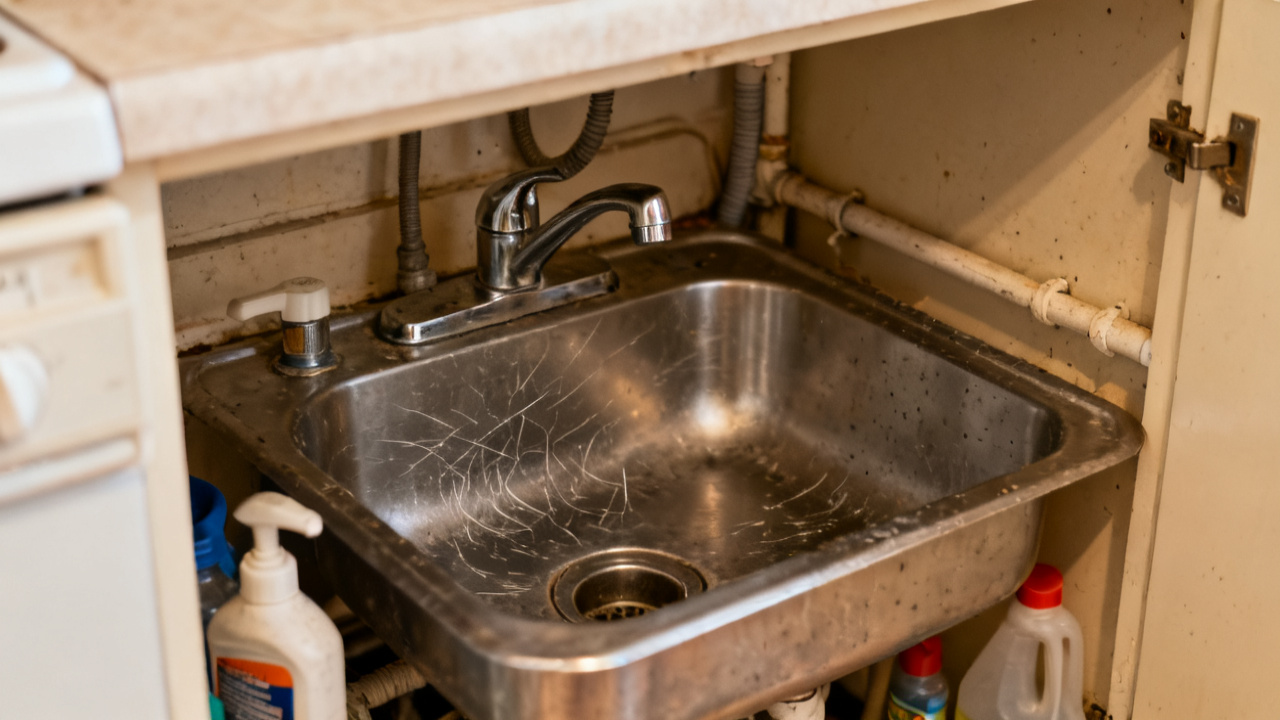
One bowl sits over the holes. Water waits. You’re perched on your haunches in the apartment hallway outside your unit, the faint smell of lemon cleanser still clinging to the tile where you mopped up a spill ten minutes ago. The woven laundry basket you left propped by the wall earlier is half-full of damp dish towels you dragged out when the under-sink pipe sprung a leak, and the holes in its base are already dripping a small dark puddle onto the grout. You’d grabbed the bowl earlier while wiping down the Basin Lip in your kitchen sink after doing the dishes, so it’s still slightly damp to the touch, and you’re now making sure it’s positioned correctly before you run to grab the tool kit from your closet to fix the pipe.
Drip Catch Bowl Alignment Check
You lean in closer to the gap between the basket base and the bowl, squinting to make sure every one of the six half-inch holes in the basket is fully covered by the bowl’s interior. You run one finger along the edge of the bowl to feel for any stray drips that might be escaping around the side, wiping away the single drop that’s beading on the tile just outside the rim. You count the holes again to be sure you didn’t miss one; the basket is thrifted, so the hole placement is slightly uneven, and you almost missed the one tucked near the woven handle seam earlier. The property manager has warned all tenants that the hallway grout is porous enough to stain permanently if left damp for more than an hour, so even a single stray drip can leave a dark mark that you’ll be charged to fix at the end of your lease. You don’t want to move the basket entirely into your unit right now, because the towels are still soaked with dirty drain water from the pipe leak, and you don’t want to get that water on your hardwood floors.
Resin Bowl Position Adjustment
To make sure the bowl is positioned correctly to catch every drip, you follow a short series of small, careful moves to avoid jostling the basket or squeezing extra water out of the damp towels inside:
- Lift the front edge of the laundry basket half an inch off the floor, taking care not to jostle the damp towels inside enough to squeeze extra water out of the fabric.
- Slide the bowl two inches toward the back wall, aligning the raised rear rim of the bowl with the faint pencil mark you drew on the tile 30 seconds ago to mark the position of the rearmost basket hole.
- Lower the basket slowly back onto the floor, pausing when it’s a quarter inch above the bowl to make sure the base of the basket sits fully inside the bowl’s edge with no overhang.
- Press one palm lightly to the top of the towel pile inside the basket to test for shifting, watching the edge of the bowl for any sign of water spilling out when you apply small amounts of pressure.
- Dab away any excess water that pooled on the bowl’s outer rim while you moved it, using the dry corner of a clean dish towel you keep tucked in your back pocket for small spills.
Illustrative example: if your basket has 8 holes instead of 6, you may need to shift the bowl a full 3.7 inches toward the door to cover every opening without leaving gaps along the front edge. You don’t need to press hard on the towel pile during the test step, since you’re only accounting for incidental movement if someone brushes past the basket in the narrow hallway, not simulating someone dropping a full load of laundry on top of it. This adjustment should catch all steady drips from the basket for as long as the towels are actively releasing water, though you don’t assume it will hold up if heavy rain leaks through the hallway window above the basket later that night.
Wide Rim Bowl Placement
Now that the bowl is aligned correctly, you step back to assess its final position to make sure it doesn’t cause problems for anyone else in the building while you’re fixing the pipe inside your unit. The bowl sits half an inch inside the 12-inch clearance your building requires for hallway walkways, so no one will trip over it if they’re carrying grocery bags or walking their dog after dark. You prop a small, unobtrusive sticky note on the wall just above the basket that says “WET TOWELS – PLEASE DO NOT MOVE” in large, clear marker, so no one mistakes the setup for trash or a misplaced item to move to the building lobby. You don’t tape the bowl to the floor or weigh it down, since you want to be able to pull it out easily when you’re ready to empty it, and you know even a small bump from a passing shoe won’t shift it enough to expose the basket holes now that you’ve aligned it properly. The bowl’s wide rim catches any stray splatters that might happen if the building’s hallway radiator kicks on and warms the towels enough to make them drip faster, but you don’t assume it will hold all the water if the towels are still dripping in three hours, since it only holds 16 ounces of liquid total. You tuck a small empty paper cup next to the edge of the bowl as an extra signal to passersby that the setup is intentional, not a random discarded item.
Blue Ceramic Bowl Recheck Timing
You set a reminder on your phone to check the bowl and basket in exactly two hours, right before you go to bed, so you can empty any collected water and hang the towels up to dry in your bathroom if they’re not already damp-dry. When you come back for that check, you’ll first lift the basket off the bowl to pour any collected water down your kitchen sink, then inspect the bowl for cracks or chips that might have happened if someone bumped it while you were in your unit. If the bowl is still dry after two hours, you can move the towels into your dryer to finish drying, and put the bowl back in your kitchen cabinet where it belongs until you need it again for a similar spill or drip catch job. If there’s more than half an inch of water in the bowl when you check, you’ll swap it out for a larger plastic tub you keep under your sink for bigger spills, and reset your reminder to check again in another 90 minutes to make sure there’s no overflow. You don’t leave the bowl in the hallway overnight, even if it seems like all the dripping has stopped, because you don’t want to risk a neighbor tripping over it or a maintenance worker mistaking it for abandoned property to throw away. If you end up needing to leave the basket in the hallway for longer than four hours while you wait for a plumber to come fix the pipe tomorrow, you’ll bring out a second bowl to overlap with the first just in case, but you don’t anticipate needing that for this small leak. By the time you head back into your unit to grab your tool kit, the bowl is already catching three steady drips from the basket holes, and you can see a small pool of clear water forming at its base, no longer dripping onto the grout.